
National Reception, Lived Experiences, E.U. Pressures
A Two-Day Program presented jointly by Columbia University and 糖心vlog
Wednesday, April 26, 2017
Thursday, April 27, 2017
厂别别听
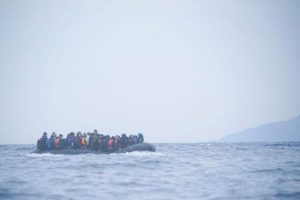
The Euro-Mediterranean migrant crisis prompted by the turmoil in North Africa and the Middle East continues to be discussed with increasing frequency in the media as well as in public debates, featuring experts from diverse backgrounds. Still, among the various perspectives presented, the Italian one has not been as central as its crucial role in the arrivals of both economic migrants and political refugees would warrant. As of Spring 2016, Italy is one of the chief landing points for migrants after the recent restriction of the Turkey/Greece route. Italy鈥檚 unique position in geographical and political terms as an established country of immigration 鈥� and a long history of emigration 鈥� offers materials for a fruitful reflection not just on a national case but on the entire Mediterranean scenario and its effects on the supranational stability of the E.U.
A two-day event scheduled for April 26-27, 2017 will address a wide range of topics ranging from reception to detention, asylum laws, and international agreements. The first day a panel of experts active in Italy, the U.K. and the U.S. will discuss: the governance of irregular sea crossings at the point of reception as a mix of formal and informal regimes; the post-arrival lived experience of the migrants in a context characterized by the transformation of migrant labor, the feminization of migration and migrants鈥� access to justice (or lack thereof); and the role of the EU Migration Agency Frontex in implementing the EU Agenda on Migration.
The presentations will highlight how complex the Italian case is given the tension between those seeking to enforce strict immigration requirements, and those who insist on the state鈥檚 humanitarian responsibilities. Additionally, they will show the friction between Italy鈥檚 desire to respond to national priorities in governing its borders and post-national dynamics that are forcing Italy (along with some other Mediterranean states) into the role of a policing state for the rich heart of Europe. The vocal presence of the Pope 鈥� who has recently stated in uncompromising terms: 鈥淢igrants are not a danger-they are in danger鈥� 鈥� and of a vast Catholic world sensitive to the needs of the migrants has further contributed to make the Italian debate diverse and dynamic.
At their core, the speakers鈥� presentations will stress the importance, for Italy as well as Europe, to move beyond the treatment of the situation as an emergency (Italy has been receiving immigrants in large numbers since the 1990s), and to adopt more structured solutions attentive to the interests of the multiple players involved.
The second day, a film screening will be the occasion to further debate issues of migration in the Mediterranean and its representation in the media and in the arts. Along with the panel on the first day, it will provide topics of interest for a consideration of global migrations at large, stressing the echoes of the U.S. Southwest border when discussing the Euro-Mediterranean migrant situation.
Both parts of the program are public events designed to speak to a broad audience along with scholars and practitioners in the field. In illustrating the complexities of the migration crisis through the Italian perspective, the two-day program aims at offering Italy as a productive laboratory of ideas and experiences about migration across time and space.
- Designed and organized by Ernest Ialongo (Hostos Community College, CUNY; Chair, Columbia University Seminar in Modern Italian Studies) and Teresa Fiore (Inserra Endowed Chair in Italian and Italian American Studies, 糖心vlog)
- with the support of the聽,听聽at 糖心vlog, and the聽Columbia University Seminar in Modern Italian Studies
- with the cosponsorship of聽and the聽
 鈥�
鈥�
 聽聽 聽聽
聽聽 聽聽
Resources:
聽(Repubblica, Dec. 14, 2016, article in Italian)
聽(The New York Times, Dec. 21, 2016, article by Dan Ruetenik)
by Roberto Saviano (The Guardian, June 19, 2018)
For events on similar topics, click聽